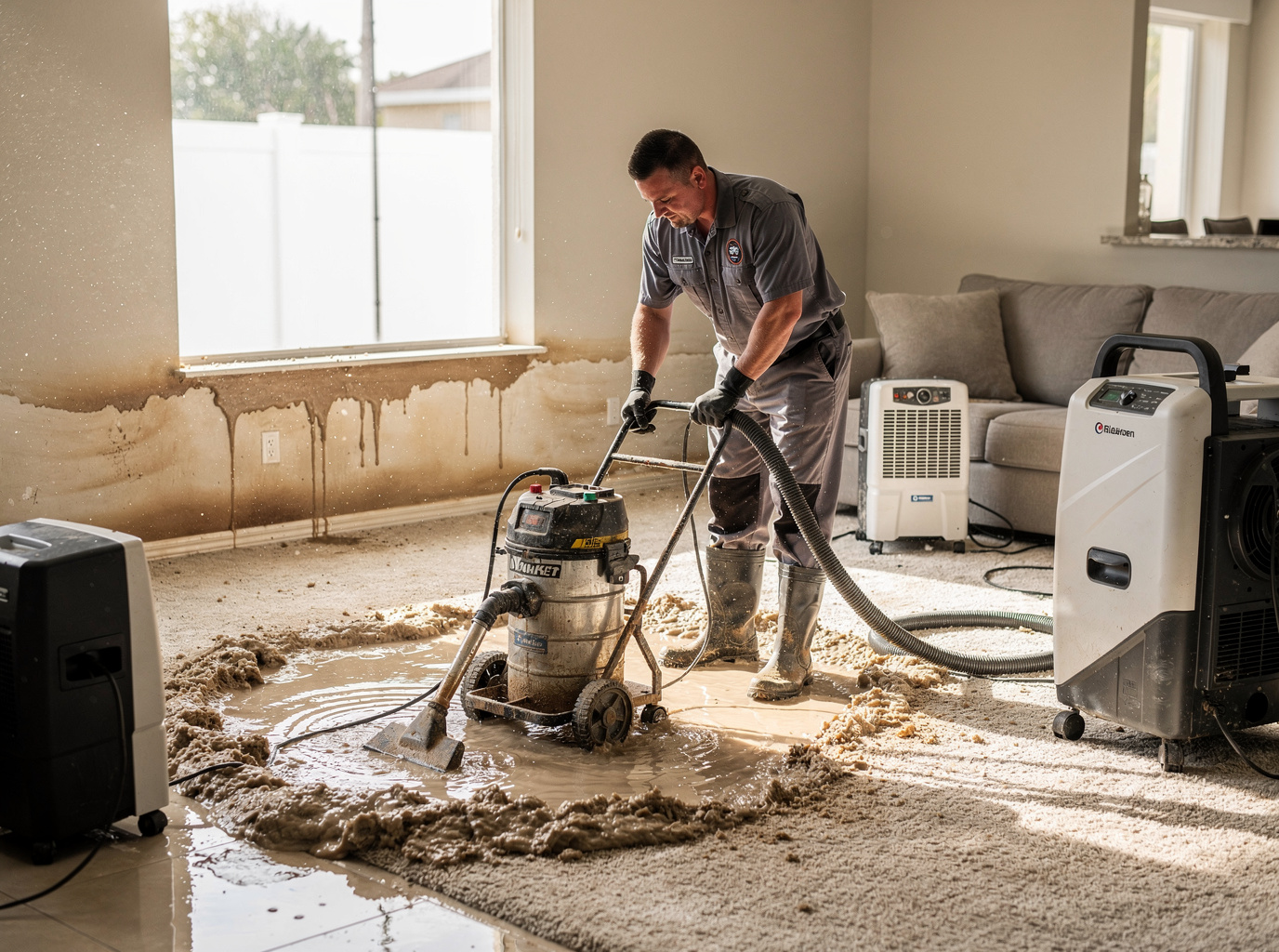
Orlando Water Damage Restoration Pros handles water damage restoration calls in Sanford where the St. Johns River and Lake Monroe create frequent flood risks for homes along the shoreline and in the historic grid. Crews reach properties off First Street and Park Avenue quickly via US 17-92, extracting standing water from older frame and masonry houses that sit close to grade with limited side-yard access.
Afternoon thunderstorms common in Orange County often overwhelm roof drains and gutters on Sanford’s 1950s-1970s ranch homes and brick bungalows near Seminole State College. Technicians use portable pumps and air movers sized for narrow driveways and carports typical of the area, drying wall cavities before moisture migrates into the lime-based plaster found in many downtown blocks.
River-adjacent lots in Sanford frequently retain water longer after heavy rain because of the flat terrain and high water table. The team stages equipment at the 440 Santiago Ave shop and heads north on I-4 to reach these addresses before secondary damage sets in, focusing on subfloor checks in crawlspaces that sit only inches above the seasonal water line.
Around Sanford
We regularly work near:
- 📍Sanford Riverwalk
- 📍Lake Monroe
- 📍Historic Downtown Sanford
- 📍Seminole State College
- 📍St. Johns River
- 📍Seminole County Courthouse
Water Damage Restoration in Sanford — Local Notes
- •Many Sanford homes built before 1960 sit on pier-and-beam foundations that trap water after St. Johns River backflow, requiring targeted drying under the floor rather than whole-house tenting.
- •Narrow lots along Celery Avenue and Historic Downtown limit equipment placement, so crews often work from the street with extended hoses and smaller dehumidifiers.
- •Frequent summer storms drop several inches of rain in an hour near Lake Monroe, pushing water into garages and carports that lack proper grading on the older street grid.
- •High water table along the river means extracted water must be disposed of off-site rather than pumped into yards to avoid re-saturation of neighboring properties.