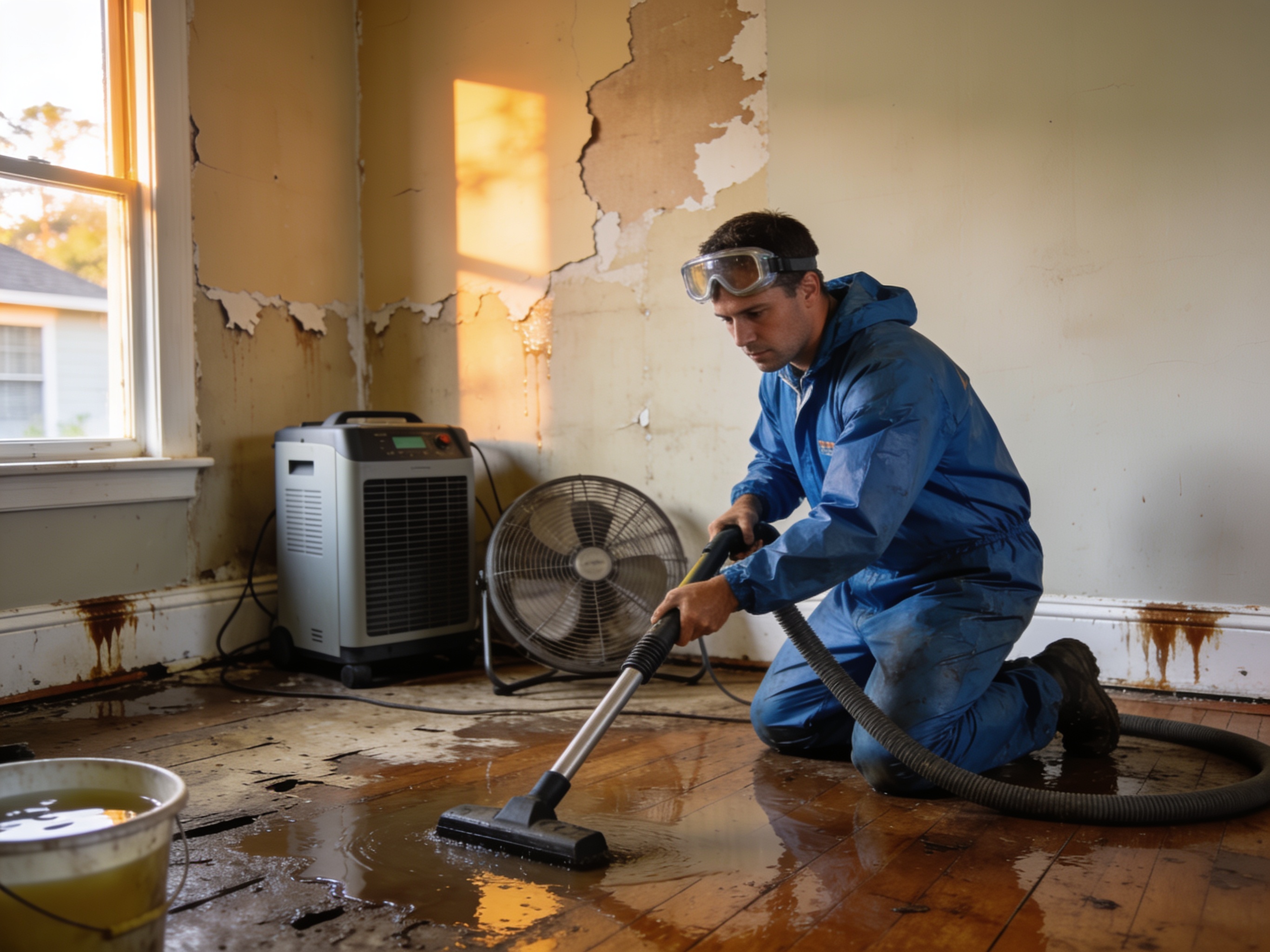
Haines City sits along US 27 south of Orlando with many mid-century block homes and citrus-era properties that sit on flat lots with limited drainage. Afternoon thunderstorms dump heavy rain that finds its way under older roofs and through stucco cracks, saturating insulation and subfloors before homeowners notice. Orlando Water Damage Restoration Pros responds from 440 Santiago Ave with crews familiar with the route down the turnpike or via 17-92, bringing extraction equipment sized for the larger square footage common on these lots.
When water sits in the sandy soil around Lake Eva or near the railroad tracks, it migrates under slab foundations and into crawl spaces that many Haines City houses still have. Our technicians map moisture with meters rather than guessing, then pull carpet and baseboards the same day so mold does not take hold in the humid subtropical air. We schedule around the Mon–Fri 8am–6pm and Sat 9am–2pm window so residents can meet us after work or on weekend mornings.
Winter Park and Kissimmee crews sometimes route through Haines City on the way back north, allowing same-day follow-up visits without extra travel. This matters when dehumidifiers need to run several days on properties near the Ridge Scenic Highway where afternoon storms keep returning.
Around Haines City
We regularly work near:
- 📍Lake Eva Park
- 📍Downtown Haines City
- 📍Haines City High School
- 📍US Highway 27
- 📍Eastside Park
- 📍Haines City Branch Library
Water Damage Restoration in Haines City — Local Notes
- •Many Haines City homes built before 1970 have pier-and-beam construction; water under the floor requires targeted drying under the structure rather than whole-house tenting.
- •Lots along Lake Eva and Lake Hatchineha often have high water tables; extraction trucks park on the street shoulder to avoid sinking equipment in soft ground after rain.
- •US 27 corridor properties see repeated roof leaks from wind-driven rain; we focus on ridge vents and flashing rather than full interior tear-outs when damage stays localized.
- •Heavy clay pockets mixed with sand near downtown slow natural drainage, so we place air movers in hallways and closets to push moisture toward open doors instead of trapping it in interior walls.