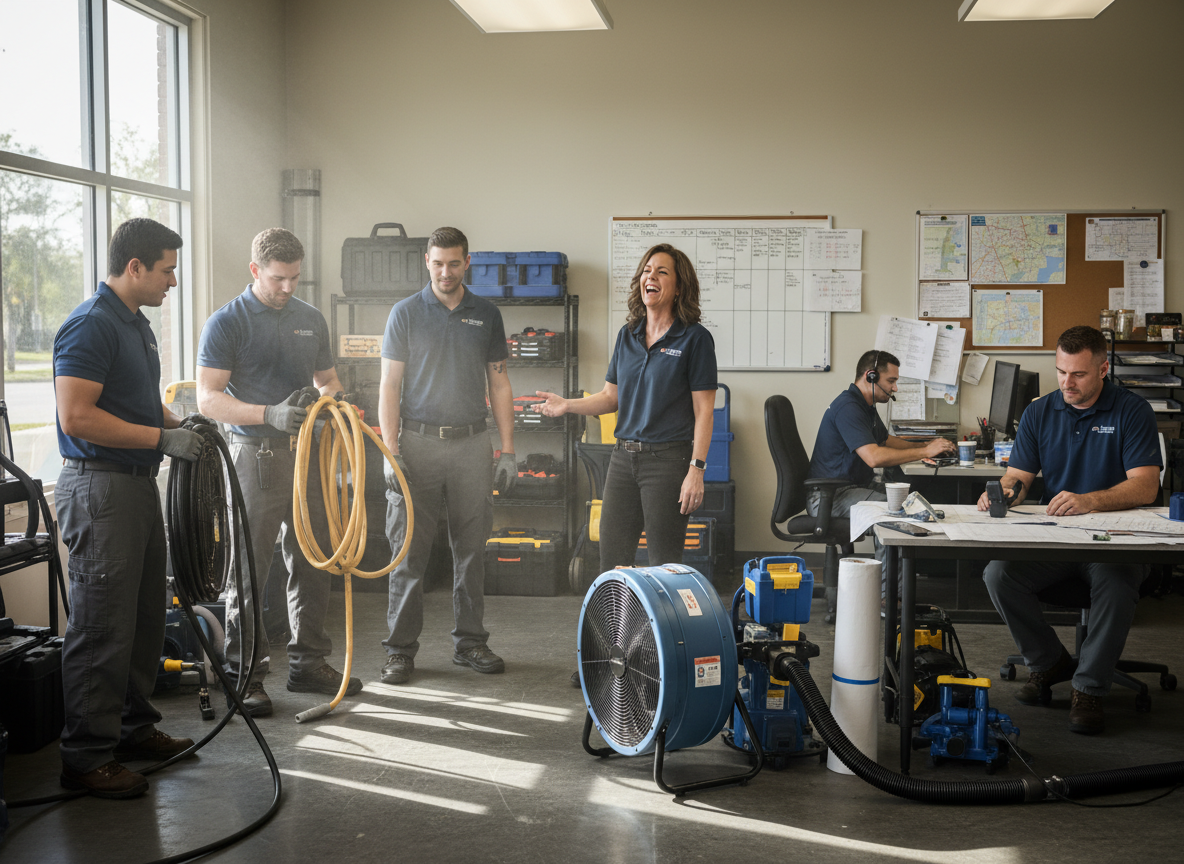
Groveland homes sit between Lake David and the Florida Turnpike corridor where afternoon thunderstorms dump heavy rain fast. Older single-story ranch houses along Lake Avenue and newer subdivisions off SR 50 both see water intrusion through roofs, windows, and slab edges when drainage ditches overflow. Our team leaves the 440 Santiago Ave shop by 8am and reaches Groveland addresses before standing water reaches carpet pads.
Clay and sand soils around Cherry Lake and Villa City Road hold moisture differently than the sandy lots closer to Mascotte. We pull baseboards early on 1970s block homes because moisture travels up stucco and ruins drywall from below. Newer builds near US 27 often need targeted drying behind tile because builders skipped proper vapor barriers under the slab.
Access via the Turnpike and SR 50 lets us reach most streets before traffic builds, but narrow cul-de-sacs near Groveland Elementary School require smaller equipment. We stage dehumidifiers on the driveway and run hoses through side yards to avoid tearing up new sod common in the area.
Around Groveland
We regularly work near:
- 📍Lake David
- 📍Groveland Community Park
- 📍Groveland Elementary School
- 📍US Highway 27
- 📍Florida Turnpike
- 📍Lake Avenue
Water Damage Restoration in Groveland — Local Notes
- •Frequent summer storms hit low-lying streets near Lake David first, pushing water under doors on lots that slope toward the lake.
- •Many 1960s-1980s homes along Lake Avenue have shallow foundations that sit close to seasonal high water tables, requiring extraction under cabinets within hours.
- •Sandy fill in newer subdivisions off US 27 dries faster than the heavier soils near Cherry Lake, but both need moisture meters behind baseboards to confirm full drying.
- •Turnpike construction noise and traffic can delay large equipment arrival, so we keep a smaller trailer stocked at the shop for same-day Groveland calls.