2026-11-11 · David Morales
Drying Out a Home in Central Florida's High Humidity
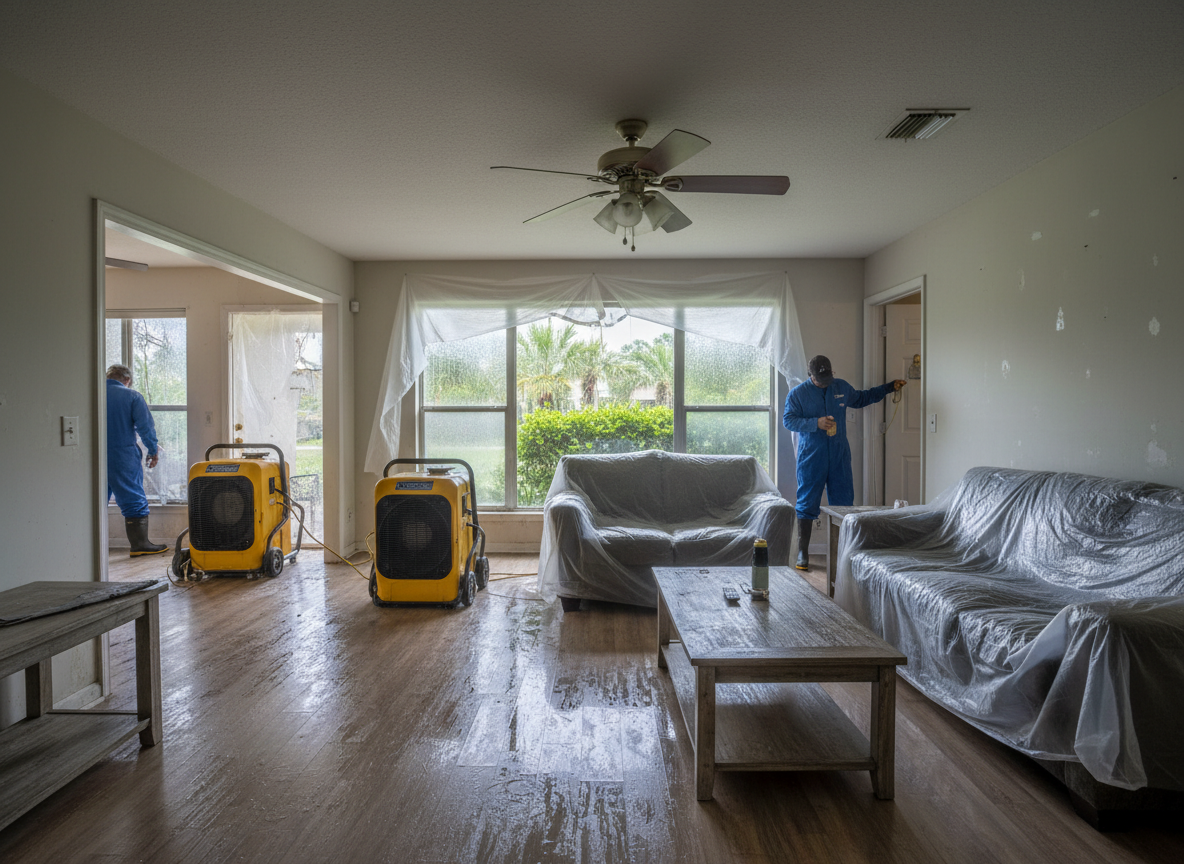
In Orlando's humid subtropical climate, drying out a home after water damage typically requires 5 to 14 days of continuous dehumidification and airflow, with afternoon thunderstorms often adding moisture that extends the process by several days.
How Orlando Humidity Slows Drying
Frequent afternoon thunderstorms drop heavy rain that soaks roofs, windows, and yards across Orange County. The air already holds high moisture, so water left in drywall, subfloors, or insulation evaporates slowly and can re-enter the structure. Homes in Baldwin Park and Mills 50, many built between the 1940s and 1970s, often have older plaster or lath-and-plaster walls that trap water deeper than modern drywall. Without extraction and dehumidification rated for 70-plus pints per day, relative humidity inside can stay above 60 percent for weeks. Technicians monitor moisture meters daily because a reading above 15 percent in wood framing signals hidden risk. Thunderstorms that hit between 2 pm and 6 pm can push indoor humidity back up even after initial drying begins.
Equipment Choices That Match Local Conditions
Standard box fans alone cannot overcome Central Florida humidity. Technicians use commercial LGR dehumidifiers paired with air movers that create negative pressure to pull moist air out of cavities. In single-story ranch homes common in Thornton Park and College Park, placing units in hallways and directing airflow into each room prevents pockets of trapped moisture. For two-story homes in Ivanhoe Village, technicians often run separate drying zones upstairs and downstairs because heat rises and humidity follows. Desiccant dehumidifiers are brought in during the wettest summer months when ambient humidity exceeds 80 percent. Daily logging of temperature, humidity, and moisture content shows when materials have returned to within 2 percent of normal levels.
Seasonal Patterns That Change Drying Timelines
Winter months bring cooler, drier air that can shorten drying by a few days, yet sudden cold fronts sometimes cause condensation on cooler surfaces. Summer and early fall see the longest timelines because consistent 90-plus-degree days and frequent storms keep outdoor humidity high. After a storm hits Lake Eola Park or the area around the Orange County Courthouse, water can enter through older window seals common in Downtown Orlando properties. Homes near Harry P. Leu Gardens often sit on slightly lower lots where drainage is slower, requiring extra extraction time before drying equipment starts. Checking Water Damage Checks After Orlando's Summer Thunderstorms helps homeowners spot hidden saturation before mold begins.
Practical Steps Homeowners Can Take While Waiting
Remove standing water with a wet vac within the first hours. Open windows only when outdoor humidity drops below indoor levels, which is rare during summer afternoons. Move furniture away from walls so air movers can reach baseboards. In areas like Winter Park and Altamonte Springs, where many homes have slab-on-grade construction, watch for water that migrates under tile or vinyl. Avoid running household dehumidifiers rated under 50 pints because they cannot keep up with the volume released from saturated materials. Professional crews from Water Damage Restoration track progress with thermal imaging to locate moisture behind cabinets and under flooring that homeowners cannot see.
When to Call for Water Damage Repair in Nearby Cities
If moisture readings remain elevated after four days of homeowner efforts, hidden water in subfloors or behind tile usually requires targeted repair. Properties in Kissimmee and Altamonte Springs often share similar construction details with Orlando homes, so the same drying principles apply. Review What Orlando Homeowners Pay for Common Water Restoration Jobs to understand typical equipment and labor needs. Crews at 440 Santiago Ave, Orlando, FL 32807 operate Monday through Friday 8am to 6pm and Saturday 9am to 2pm to respond when readings show rising risk.